Late blight, caused by Phytophthora infestans, becomes highly aggressive during periods of high humidity, cloudy weather, and intermittent winter rainfall. This season’s climate pattern has created perfect conditions for a sudden outbreak, especially in dense potato fields.
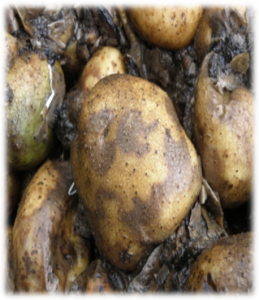
How to Identify Early Symptoms ?
- Water-soaked, irregular dark spots on leaves
- White fungal growth on leaf undersides (during humid mornings)
- Dark brown to black lesions on stems
- Rapid wilting and collapse of plants in severe cases
Early detection can prevent field-wide spread.
Control
Start spraying when weather conditions favour disease (fog, humidity, light drizzle).
Best preventive options:
- Mancozeb 75% WP @ 2.5 g/l
- Copper Oxychloride 50% WP @ 3 g/l
Spray interval: 7–10 days, depending on weather.
If lesions are observed: Use systemic + contact fungicide combinations,
- Cymoxanil 8% + Mancozeb 64% WP @ 2.5 g/l
- Dimethomorph 50% WP @ 1 g/l
- Metalaxyl-M + Mancozeb @ 2–2.5 g/l (NS Talwar Gold)
Spray interval: 3–5 days, then shift back to preventive schedule